
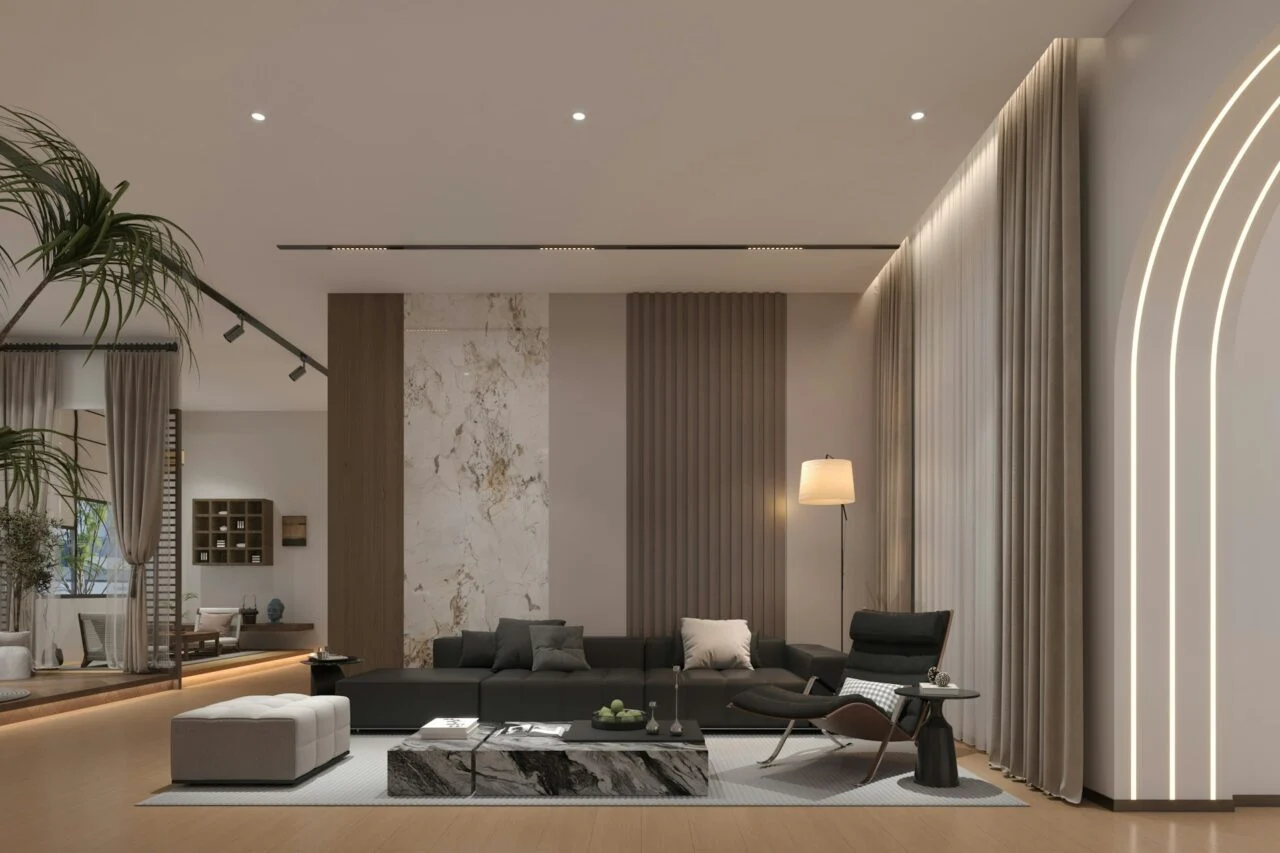
Lighting is the most noticed and most used system in a smart home. However, the quality of lighting control is often determined before the automation team even arrives on site, by the choice of fixtures and drivers. In this article we summarise the points architects need to settle at project stage.
Three basic control methods
On/off
The simplest method. It is enough for technical areas, storage rooms and some outdoor lighting that does not need dimming.
Phase-cut dimmer
Dims over the existing mains circuit. However, not every LED fixture is compatible with every dimmer; incompatible pairings show up as flicker, buzzing or unstable light at low levels. With this method, fixture and dimmer compatibility must always be tested.
DALI-2
DALI is an international standard developed for lighting control (IEC 62386); DALI-2 is its current version, which strengthens interoperability between manufacturers through certification. Each driver is addressed individually, so fixtures can be dimmed precisely one by one or in groups. A DALI line can hold up to 64 drivers. For tunable white fixtures, drivers supporting DT8 are used.
What is the role of KNX?
KNX lets the lighting speak the same language as the rest of the home. Scenes, motion and daylight sensors, curtains and climate all work on the same logic. DALI lines connect to the system through KNX-DALI gateways. DALI-2 provides the precision of the lighting, and KNX provides its integration.
What the architect needs to settle at project stage
- Specify the driver type in the fixture schedule: DALI-2, DT8 (colour temperature) or phase-cut. “Dimmable” on its own is not enough.
- Draw up the grouping and circuit plan: Which fixtures are controlled together and which separately determines the scene design.
- Plan sensor positions: Motion and daylight sensors should appear on the ceiling plan.
- Choose switch and panel positions together with the design: Fewer, well-placed design switches keep the walls clean.
- Reserve panel space: Enough panel volume for DALI gateways, power supplies and actuators should be planned from the start.
Common mistakes
- Choosing non-dimmable drivers for areas that are meant to be dimmed.
- Mixing fixtures with different colour temperatures in the same space.
- Using a separate switch for every circuit, filling the walls with switches.
- Not allowing service access to drivers in concealed lighting profiles.
Conclusion
Good lighting control starts with a good fixture schedule. Working with the automation team while the project is at an early stage is the most efficient route in terms of both cost and quality of result.
You can find our technical drawing, device list and site coordination support for architecture practices on the For Architects page. To discuss your project, write to us on WhatsApp, or experience the lighting scenes in our showroom.